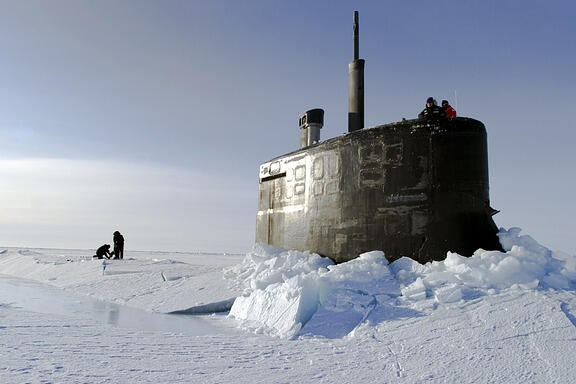
aRC-TeK
digital
your journey beneath the waves begins here
Introduction
The basics of the aRC-TeK Digital training programme.


Simulation systems
How to participate in aRC-TeK Digital training sessions.
DM Resources
Guidelines and materials for virtual session Dive Monitors.

Introduction
What This Is
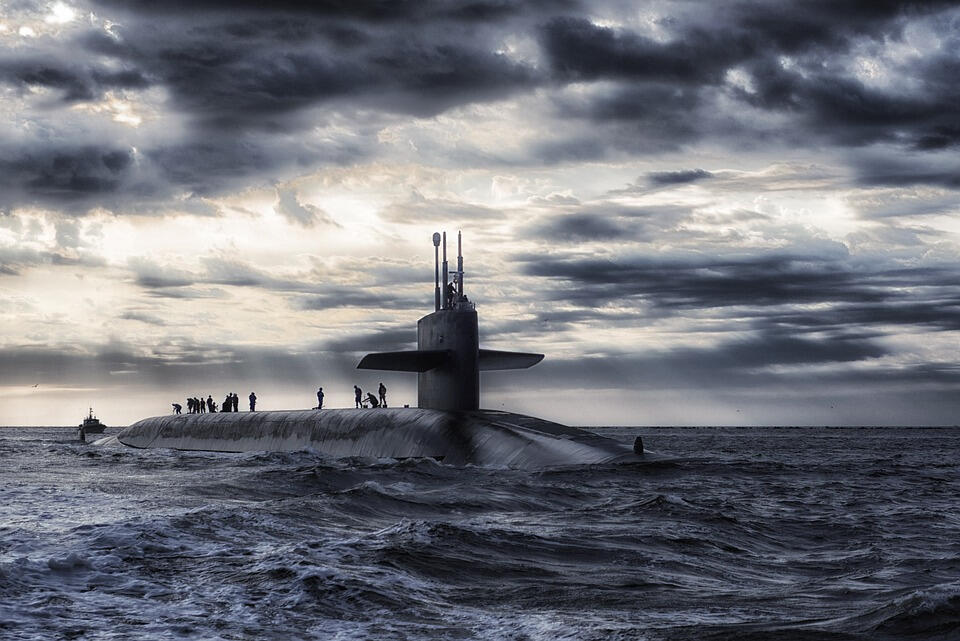
Due to the unusual nature of the aRC-TeK project and the unique threats faced by participants, Kingdom Group Ltd has created this online training programme, referred to as aRC-TeK Digital, to provide initial education and orientation for prospective pilots. By participating in aRC-TeK Digital roleplaying sessions, you will gain familiarity with the aRC-TeK project as a whole and gain creative insights into the work you will be expected to undertake if accepted as a project team member. Advanced courses are also available for existing aRC-TeK pilots and technical crew.
Precursor Sites
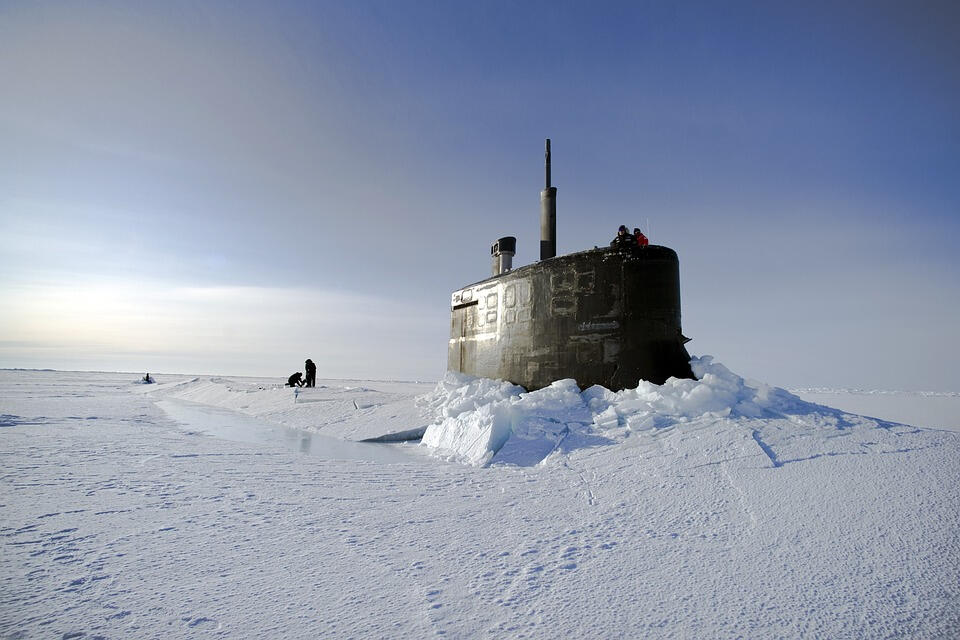
Abyssal dungeons dug into the ocean floor millennia ago, hidden beneath the icy, inky waters of the Arctic.Treasure: aRC-TeK sends subaqua teams to retrieve alien tech and extraterrestrial materials from the Precursor Sites, referred to as "treasure". Treasure items are rated in GP (generative potential) upon return to the aRC-TeK home station.Dwellers: the aliens are gone but their servitors remain. Biological, mechanical, biomechanical. These constructs and creatures are studied and recorded in an aRC-TeK recognition guide referred to by crews as the Monster Manual. Each "unit" has a designated aRC-TeK reporting name, typically drawn from mythology or fantasy fiction.
Training Format
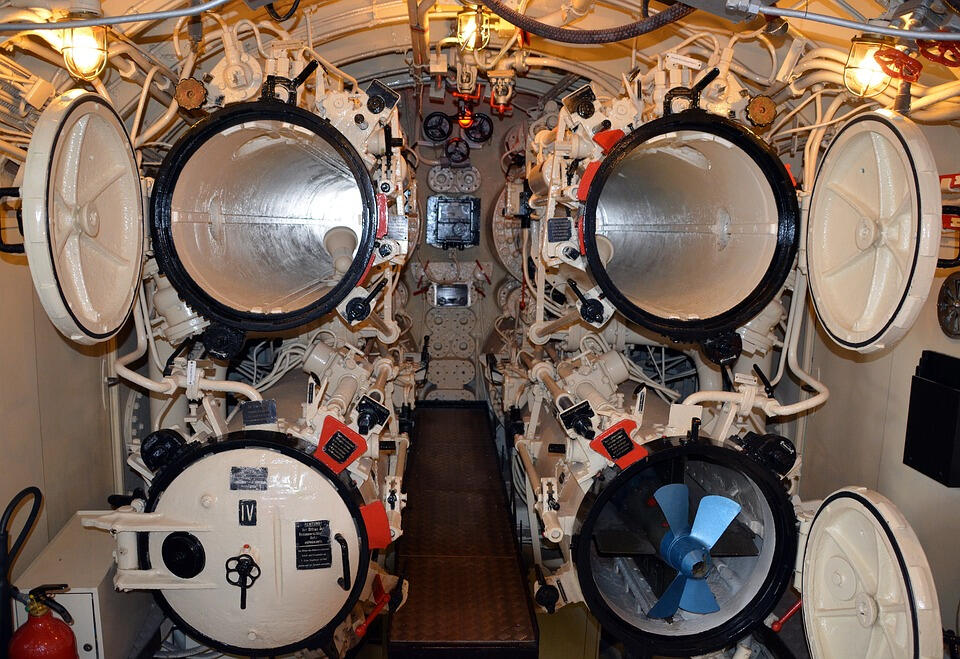
To participate in an aRC-TeK Digital session, you'll enter an online video conference with the Dive Monitor (DM) and other participants – often referred to as "players".Where possible, make your real or virtual background resemble the interior of an aRC -TeK submersible, to enhance the realism of the experience for the group.The DM will share a screen of the area scan, with tokens to track the movement and locations of your subs and any units your group encounters during the scenario.
Your Persona
As part of the session setup, you'll create a "persona" – essentially a fictional character that you'll play like an actor. You'll need to decide what you would do in a given situation and respond accordingly during the simulation exercise. Your persona can simply be yourself, but deliberately adopting a different personality type often provides valuable insights into how different aRC-TeK team members may react in emergency situations.Your persona is assigned qualities called Skill and Nerve. These are not typically a reflection of your real-world capabilities but rather a way to introduce challenging constraints to the events of the simulation.
Communications during the Session
Things you say out loud are in-character: that is, they're the things you would say in real life during a mission.
Out-of-character info is sent by text when needed, as are calls for delta checks."Blue 5, status?" (DM when drawing Blue 5's initiative card.) "I'm heading into chamber 3 now, scanning." (Blue 5 moves into room 3 on the map.) "Blue 5, I read a category 3 hull breach, damage report please." (DM rolls 3 damage in an attack.) "Hull integrity is at 25%, control." (Blue 5 relays how many HP are left.) Supply dice sizes become in-character terms: "Air supply is at D6."
Simulation systems
TERMINOLOGY
Delta check: Generate a random number between one and a specified number, written as d(number). E.g. d20 means a number in the range 1 to 20. A six-sided die is a d6. Your Dive Monitor will inform you when and how to make a delta check.Test: a d20 check compared to a specified number. If result is equal to or less than the target, the test is a success.Contest: both sides check d20. Highest without going over the specified statistic wins. If both fail, highest delta wins.Spend points from the Mission Pool to raise or lower a delta check result, one for one.Supply delta: a measure of resources available, on a scale rising as follows – d4–d6–d8–d10–d12. If a supply delta check results in a 1 or 2, reduce its size by one. Resources that drop below d4 are completely depleted.
Your Persona
Each trainee's Persona begins with 2D6+4 SKILL and 2D6+4 NERVE. That is, for each stat, generate two D6 checks, add them together and then add 4.Your Sub
Each expedition member's submersible has the following stats.
d6+1 HULL POINTS (HP)
SIZE = 10 - HP.
D6 supply deltas: HEAT, NOISE
Design depth: level 1 (approx. 300m)Choose a number of sub modules up to your sub's SIZE:
cargo space (1 item) /
6 torpedoes (ineffective at close range) /
structural reinforcement (+1HP) /
close defence array (close range only, 6 shots) /
life support (+1 crew)The Mission Phase
Click hereThe Surface Phase
Click here
Surface Phase
In the Surface Phase, you Persona returns to the aRC-TeK Surface Station to rest, recuperate and develop.

Recce
When you assess a person or situation, test your SKILL
If you succeed, ask a question. When you next act on the answer, take the best result from 2 d20s, or give this advantage to another Persona.Ask:
How can I help?
What do they want?
What have I missed?
How can I get...On a fail, ask a question and roll take the worst of 2 D20 results when you act on the answer.
Relate
When you make a personal connection and reveal a significant truth, generate a D20 delta.On 17+, choose two. On a 10–16, choose one:
Restore a lost point of NERVE for yourself
Restore a lost point of NERVE for your friend
Add two to the Mission Pool.
On a 9 or less, things don't go so great.
Resupply & Refit
When you return from a mission, the Generative Potential (GP) is converted into credit that you can exchange for goods and services.
Submersible Upgrades
Battleaxe torpedo burst (7GP) - close range, slow (2 actions to use), 1d8 damage, 6 shots
Longbow torpedoes (40GP) - 6 torpedoes, ineffective at close range
Close defence array - (7GP) close range only, 6 shots
Cargo space (5GP)
Probe control unit (100GP)
Silhouette reduction (20GP) - reduce SIZE by 1 (minimum 50% of loadout slots)
Structural reinforcement (current value x 1000GP) - +1 HP
Life support for +1 crew (20GP)
Improve design depth by 1 (current level x 1000GP) - subs operating beyond design depth lose 1HP/turn per excess depth level.
Submersible Repairs
Subs regain D3 HP per week of repairs, provided free as part of the aRC-TeK employment package.
Priority service (D3HP/day) costs 3,000GP per day.
Equipment & Supplies
Rations (long-life, 7 days) (15GP)
Rations (standard, 7 days) (5GP)
High-pressure dive suit (900GP)
Remote probe (range 1: 500GP/range 2: 1000GP)
Probe upgrade/repairs (same costs as for subs)
Crew Development
Crew members accrue XP based on encounters within Precursor Sites and on the treasure successfully returned to a substation, at a rate of 1XP per GP.XP may be cashed in for personal development courses provided by aRC-TeK human resources teams.
+1 SKILL (current value x 1000XP)
+1 NERVE (current value x 2000XP)
Mission Phase

The Mission Phase of the simulation is where your persona descends into the icy waters of the Arctic to explore a Precursor site.For the most part, you'll receive information from your simulated sub displays and communicate with the Dive Monitor in real time as you will when exploring a real Precursor site after your certification course is complete.Sometimes, however, the Dive Monitor will require you and the rest of your group to take turns in performing actions, much like you might in a board game or a game of Dungeons & Dragons.
Turns
When timing is vital, use the Initiative Deck: trainees get 2 black cards each (e.g. one trainee might have the Queen of Clubs and Queen of Spades).Add 1 red card per active Precursor unit.Shuffle the cards.Draw the top card to see who goes next. When all cards are gone, the turn ends. Remove the cards of eliminated units, reshuffle and begin again.Each card drawn from the Initiative Deck represents one action that can be taken during gameplay. aRC-TeK trainees may perform their actions when one of their two cards are drawn, while any one Precursor unit should act when a red card is drawn.At the end of each turn, each trainee must: check HEAT delta (below d4 you freeze) and check NOISE delta, reducing it by one step on a 1 or 2.
Actions
Grab item: with a probe or robo-arm, test SKILL to bring item aboard.Detect: contest of SKILL (seeker) vs NERVE (quarry) - quarry checks d20 plus their NOISE delta. Check with advantage (generate two deltas and take the better one) and increase NOISE if using active sensors. On a win, you lock on to your target.Move: go to an adjacent location, increase NOISE by one step; remove any locks on you.Attack a locked-on target: inflict damage (d6), +1 NOISE. -1 torpedoRun silent: -1 NOISE, check HEAT delta.Power to life support: +1 NOISE, +1 HEATRelay location: tells all allies where a target unit or item is

In the site map above, chambers 1 to 4 are considered discrete locations, as are corridors A, B and C. Moving from chamber 2 to corridor B, for example, would require one action.
Emergencies
At 0HP: test SKILL and NERVE to rise one depth level.If both tests are failed: crew & vessel lost.
SKILL fail: vessel out of action for 1 week.
NERVE fail: -1 to crew SKILL and NERVE.
DM Resources
As Dive Monitor you're in charge of the expedition. Prepare area scans (level maps) and show them to the players when they enter the level.Use tokens to represent the trainees' subs and Precursor units: within your virtual tabletop, use a hidden layer to easily track Precursor units that Personas don't have contact with. If you're running an onsite training session at one of our regional offices, you'll be provided with a full briefing on how to use our proprietary simulation suite. For those of you working remotely, we recommend Streamyard.com: create a recording-only studio for your simulations, share the URL with your trainees and then use the studio as your online simulation space. No need to press "record".You can find the online dashboard here as a Google Sheets file.
Make a copy for your own use.Bandwidth permitting, you may wish to use sound effects for ambience. The standard aRC-TeK "sound board" can be found here.
Recognition Guide Data
Armour Class (AC): the maximum damage the unit will sustain from a single attack. [In later editions of the Manual, this became an ascending rating out of 20: subtract the number from 20 to determine AC]Hit Delta (HD): an approximate rating of durability based on observed prior encounters. 1HD is equal to 1-8HPAttacks (Att): Attacks the unit can use, with typical damage range in parentheses.Number appearing (num): typical number of the unit encounteredExperience Points (XP): points accrued to a crew member's record for successfully handling an encounter with one such unit.
Unless otherwise noted, units are rated 10 for SKILL and NERVE.
Recognition Guide extractsRival project teams
Acolyte - AC2, 1HD (avg 4HP), Att torpedo (d6), num 1-4 (1d8), 15XP
Bandit - AC6, 1HD (avg 4HP), Att torpedo (d6), num 1-8 (1d8), 10XPPrecursor Security Craft
Level 1+
Goblin repair drone - AC6, 1-1HD (avg 3HP), Att cutting tool (close, d6), num 2-8 (2d4), 5XP
Skeleton sentinel - AC7, 1HD (avg 4HP), Att spear (close, d6), num 3-12 (3d4), 10XPLevel 2+
Zombie guardian droid - AC8, 2HD (avg 9HP), Att claw (close, d8), num 2-8 (2d4), 20XP
Elf interceptor - AC5, 1+1HD (avg 5HP), Att plasma torpedo (d6), num 1-4 (d4), 19XP
Ghoul heavy drone - AC6, 2HD (avg 9HP), Att: 2 x claw (close, 1d3), 1 x electrobite(close, d4 + shock), num 1-6 (d6), 25XP / Shock: roll NERVE or discard your next action.Level 3+
Blink Dog interceptor - AC5, 4HD (avg 18HP), Att assault blast (close, d6), may move + attack in 1 action, num 1-6 (d6), 125XP
Gargoyle sentinel - AC5, 4HD (avg 18HP), Att 2 x claw (close, d6), 1 x blast (close, d6), 1x beam-lance (close, d4), num 1-6 (d6), 75XP
Ogre patrol droid - AC5, 4+1HD (avg 19HP), Att 1 x jackhammer beam (close, d10), num 1-6 (d6), 125XPLevel 4+
Minotaur heavy guardian - AC6, 6HD (avg 27HP), Att torpedo (d6+2), num 1–6 (d6), 275XP
Vampire destroyer unit - AC2, 8HD (avg 36HP), Att deathbeam (d10 + HEAT drain), num 1–4 (d4), 1000XP
Station Personnel
You may find yourself in need of "non-player characters" to refer to during the Surface Phase. Below are a few prompts to spark your imagination. Take notes as needed on the trainee Personas' interactions with the base staff.
El Capitán, station commander, serene
Cookie, the cook, glum
Moss, repair-bot manager, reclusive
Staples, mission administrator, oblivious
Bullet, weapons technician, charming
Ping, systems technician, aloof
Turndown, dormitory supervisor, insensitive
Preparing a Simulation Level
Generally speaking, Precursor Sites at the shallowest depth levels have been thoroughly explored and no longer contain extensive deposits of materials with Generative Potential. Being peripheral to the Precursors' operations or lifestyle, they also house relatively few servitor units.The deeper you go, the more Treasure you will find, and the better guarded it will be.Random Treasure
A given chamber contains Treasure on a D6 result equal to or less than its depth level.
When Treasure is present, its value in GP is typically (Depth Level x 10) x D10.Random Encounters
A given chamber contains one or more Precursor servitors on a D8 result equal to or less than its depth level. See the "Monster Manual" Recognition Guide for more information on servitor numbers, capabilities, etc.Random Treasure Types
Black Battery
Decay Lamp
Suspensor Cubes
Itch Beacon
Slow Crystal
Aurora Pins
Perpetual Motion Ring
Fusion Bead
Optical Distender
Recuperation Torc
Advanced Options
You may wish to try more detailed or 'hard mode' simulations for advanced training courses.Detailed Detection Systems for Submersibles
Lights – illuminate the location a submersible is currently in. When turned on, Precursor servitors within range of the lights automatically detect the sub.Without lights, a sub must rely on active sonar. Active sonar is very loud, but functions at a much greater range: it can be used to detect units in adjacent locations, but each use increases NOISE.To find Treasure, lights or an individual dive suit must be used.Critical Damage
Every 3 HP of damage to a rainee's sub is critical, and a compartment floods. One crew unit in the sub is
expended, representing the submariners' ability to handle the emergency, and the sub loses the functionality of the flooded compartment. If the crew is already at 0, test NERVE and SKILL as if at 0HP.To determine critical damage location, generate a D6 check:
1 forward torpedo tubes
2 crew compartment (take Nerve damage)
3 ammunition reserve
4 command/navigation
5 engine room
6 rear torpedo tubesHard mode option: If the sub has a torpedo in a tube when it floods, it suffers an additional 1 HP of damage as the torpedo explodes.One Big Sub
In this game mode, instead of having each expedition member in their own vessel, combine the trainees' available sub stats to create a single shared vessel.
Thanks for feedback, suggestions, and questions to Brian Wille and members of the Monday International Game Club
The players and subs:
Riccardio--Carapace One
Nick--Polar Venture
Anthony--Skipjack
Lucas--Turkey Fillet